
Emergency Air Duct Cleaning Near Me: What Sheepshead Bay Homeowners Should Do First
If you’ve just found mold, a dead animal, or flood water inside your duct system, your first instinct is probably to crank the HVAC and hope the problem blows over. It won’t. Running the blower is the single fastest way to spread that contamination into every room of the house. The good news: most duct “emergencies” are not same-hour crises, but what you do in the first thirty minutes decides whether the problem stays contained or settles into your furniture, bedding, and lungs. This is a triage protocol for Sheepshead Bay homeowners, not just a phone number.
If you’d rather have a trained eye on it than guess, call (866) 937-8180 and describe what you’re seeing. In the meantime, here’s exactly what to do first.
What Actually Counts as a Duct Emergency?
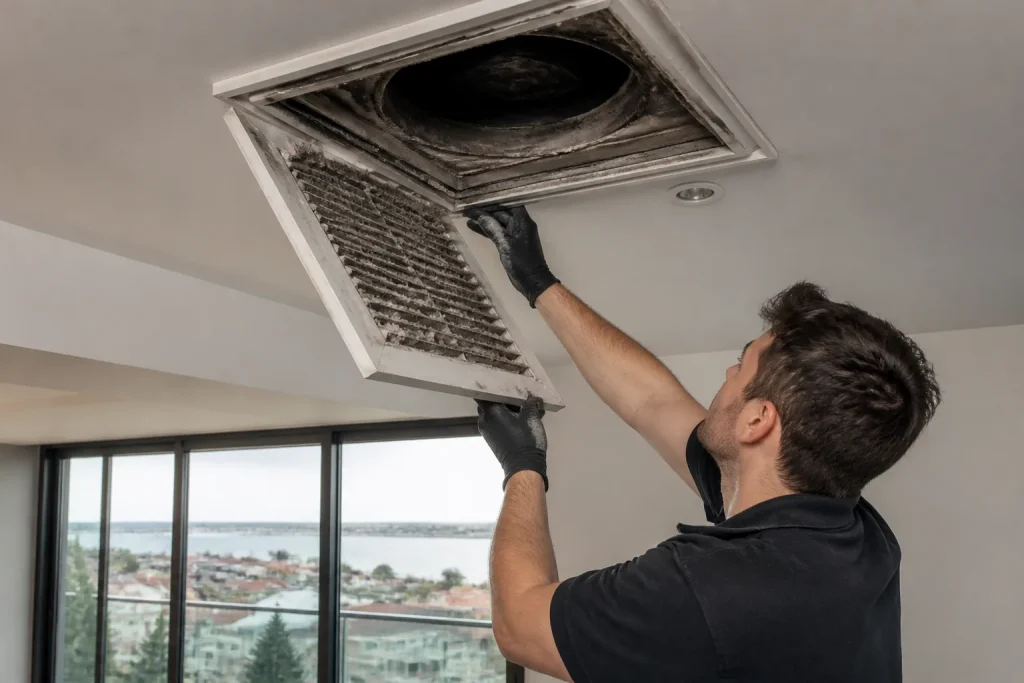
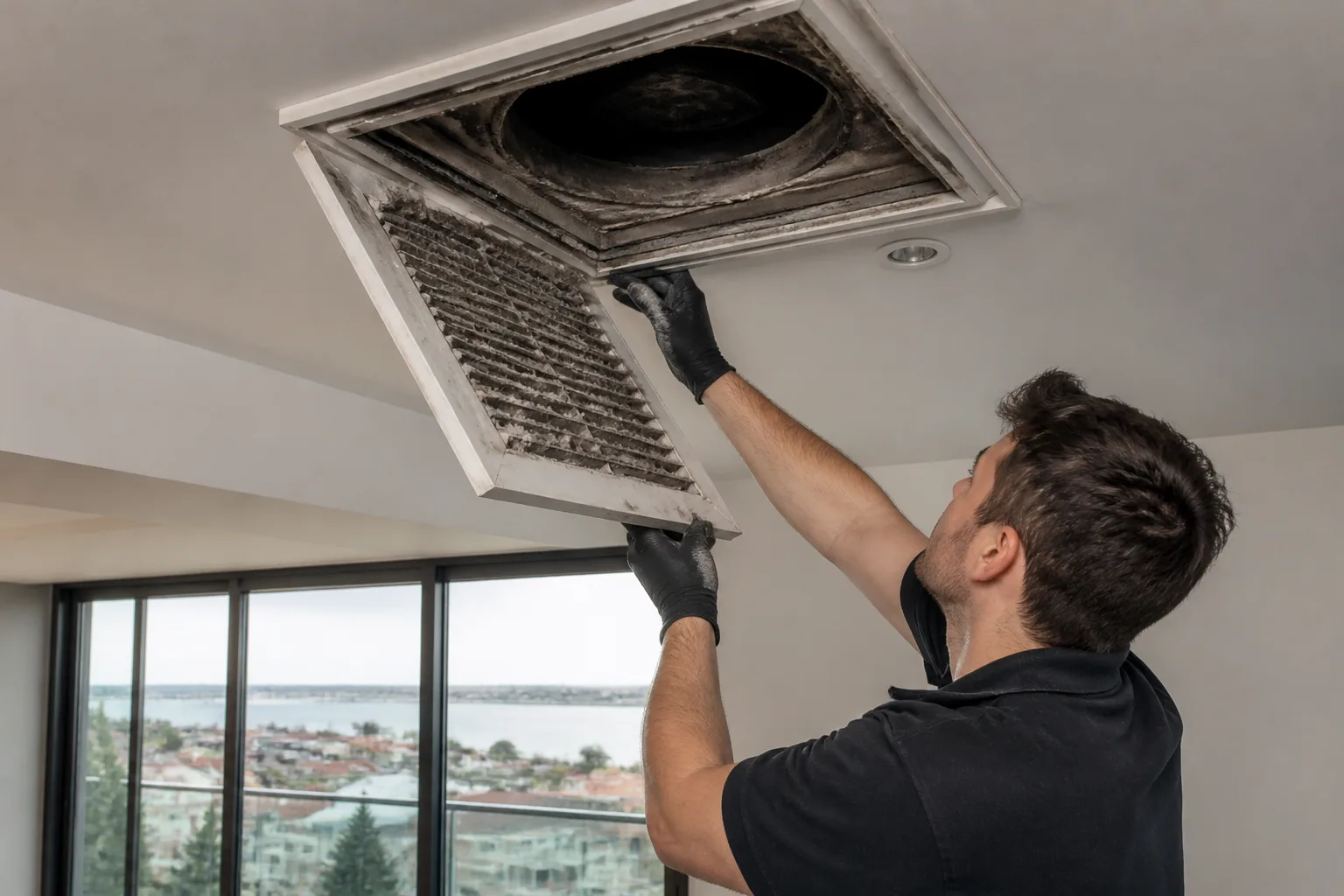
A true duct emergency is a contamination event actively spreading through your air pathway: confirmed mold growth inside ducts or on the air handler, rodent or animal intrusion with droppings and nesting material, standing water or sewage after a flood, and smoke or soot residue after a fire. These are emergencies because every minute the system runs, the contamination has another chance to colonize a new room. A routine problem that merely feels urgent is different: heavy dust blowing from registers, a musty smell that comes and goes, or allergy flare-ups during pollen season. Those matter, but they don’t need a same-day call. In our experience, homeowners often treat a routine cleaning need as an emergency because the smell is unsettling, and treat a real biological contamination like a spring-cleaning chore because it’s invisible. The sign that pushes a job from “schedule it” to “stop the system and act now” is a source you can identify: visible growth, evidence of animals, water intrusion, or heavy soot. If you can’t name the source, that’s your first task before you call anyone in Sheepshead Bay.
Your First 30 Minutes: A Triage Protocol
Stop the spread before you clean anything. Here is the sequence we recommend, in order:
- Shut off the HVAC entirely. Set the thermostat to “off” and flip the breaker for the air handler if you know where it is. Don’t run the fan to “clear the air.” A running blower is a distribution system for whatever is inside.
- Seal the accessible vents. Use painter’s tape or plastic sheeting over the supply registers in rooms you want to protect. This is temporary containment, not a fix.
- Find and document the source. Photograph what you see before touching evidence: a water stain, a rusted pan, rodent droppings near a return, discoloration on a register face.
- Don’t spray anything into the ducts. Not bleach, not a household fogger. Liquid on active mold or dry soot turns containment into a bigger remediation problem.
- Call and describe, don’t diagnose alone. Tell the company what you found and where. A contamination-source description helps them decide whether this is cleaning or remediation.
If the situation involves standing water or sewage, treat it as a water-damage job first and a duct job second. Water has to be stopped and dried before any cleaning does anything useful.
Why Sheepshead Bay Humidity Makes Mold Escalate Faster
Sheepshead Bay sits close to the water, and that changes how fast a small moisture problem turns into a mold problem. Warm, humid air holding more moisture meets a cool duct surface and condenses. That condensation film is enough for mold spores to establish in a matter of days, not weeks. Inside a duct run that’s shut off and sealed, humidity builds; the same blanketing that contains contamination also creates a damp microclimate. This is why a leaky condensate line or a small roof drip in Sheepshead Bay can turn a minor water stain into a musty system faster than the same leak would in a drier climate. We mention this not to alarm you but to explain why timing matters here: the sooner a moisture source is stopped and the air pathway dried and cleaned, the less chance the problem roots itself.
What to Ask Before You Book Anyone in Sheepshead Bay
The single most important question is this: does the company carry negative-pressure equipment capable of containing an active contamination job? Negative-pressure containment, combined with HEPA filtration, means the dislodged debris is captured on site instead of drifting into your living room. We deploy Abatement Technologies air filtration and Rotobrush and Nikro systems on this exact principle: dislodge debris mechanically, then capture it, so nothing is left to resettle once the crew leaves. Ask also whether they check the air handler and coil, not just the visible registers. Contamination settles in the system’s cold, damp parts, and a “vent-only” cleaning misses them. Finally, ask what they do with sanitizing when a biological source is present. Guardsman-grade treatments handle what vacuuming can’t, and the right company will tell you plainly whether your job needs that step or not. If the person on the phone can’t answer these questions clearly, keep looking.
When a Cleaning Job Becomes a Remediation Job
Some situations cross the line from cleaning into remediation, and a reputable duct company will tell you so. These are the red flags:
- Mold growth covering a large area inside the ducts. Beyond a spot or two, this needs an independent remediation assessment before cleaning.
- Active or recent flooding with sewage. Category 3 water requires a licensed water-damage remediator, not a cleaning crew.
- Structural damage to ductwork, or a compromised air handler with visible interior damage.
- Fire or smoke damage inside the duct system with charring or structural harm.
When those conditions apply, the right move is to stop the system, document what you found, and get a remediation contractor in. A cleaning firm that says “we can handle that” for a genuine Category 3 or structural case is overpromising. Being honest about the boundary is part of doing this work well.
When to Call a Pro
If you’ve shut off the HVAC, sealed your vents, and found a source you can name, the next step is a professional assessment. We answer 24/7 and can help you sort cleaning from remediation by phone. Fast dispatch, 7am-7pm, Sunday through Friday. If the day you call is Saturday, we’re closed – call Sunday and we’ll book you in. And if you suspect a related issue, it’s worth knowing we also cover dryer vent cleaning and HVAC cleaning, so one look at the system can address the whole air pathway.
The Bottom Line
The first move in a duct emergency is stopping the system, not running it. Seal what you can, document the source, and call. Not every musty smell is a crisis, but in Sheepshead Bay’s humid climate, a moisture source left alone gets worse faster than most homeowners expect. We clean the full air pathway, from duct to register, using Rotobrush and Nikro systems and Abatement Technologies filtration, with Guardsman sanitizing available when the job needs it. Every job is quoted as one flat price per system, agreed before work begins, and if you’re in Sheepshead Bay and need help, Air Duct Cleaning Sheepshead Bay offers free estimates – call (866) 937-8180.
If you’ve been meaning to schedule air duct cleaning and are now wondering whether you’re too late, you likely aren’t. Start with the phone call. Back to Air Duct Cleaning Sheepshead Bay for the full service picture.
Frequently Asked Questions
No. Turn the system off until the source is identified, because running the blower spreads spores into every room the ducts reach. Call for an assessment and describe the smell and where it’s strongest.
A real emergency has a named source: visible mold, rodent evidence, flood water, or fire soot. A routine job is heavy dust, a persistent musty odor, or seasonal allergy spikes with no identifiable source. When in doubt, stop the system and ask.
We’re closed Saturday. We’re open Sunday through Friday, 7am to 7pm, and we answer the phone 24/7, so a call placed outside dispatch hours is booked into the next opening. Call (866) 937-8180 and we’ll get you scheduled.
Ask whether they carry negative-pressure and HEPA containment equipment, whether they clean the air handler and coil, and how they handle sanitizing for biological sources. A company that answers all three clearly is the right call. If any answer is vague, keep asking or keep looking.
Written by the team at Air Duct Cleaning Sheepshead Bay.
Need Air Duct Cleaning Help?
Call Air Duct Cleaning Sheepshead Bay - the local pro we connect you with is licensed and insured, with free written estimates in Sheepshead Bay.
(866) 937-8180