
Rotobrush Air Duct Cleaning in Sheepshead Bay: A Homeowner’s Guide
Most homeowners in Sheepshead Bay hear “Rotobrush” on the phone and assume it’s a brand of clean. It’s not. Rotobrush is a specific mechanical cleaning method, and whether it suits your home depends on the duct material, the debris inside, and how the system was built. Here’s the plain-language version of how it works, when it’s the right call, and when another approach would serve you better.
How Rotobrush technology actually works
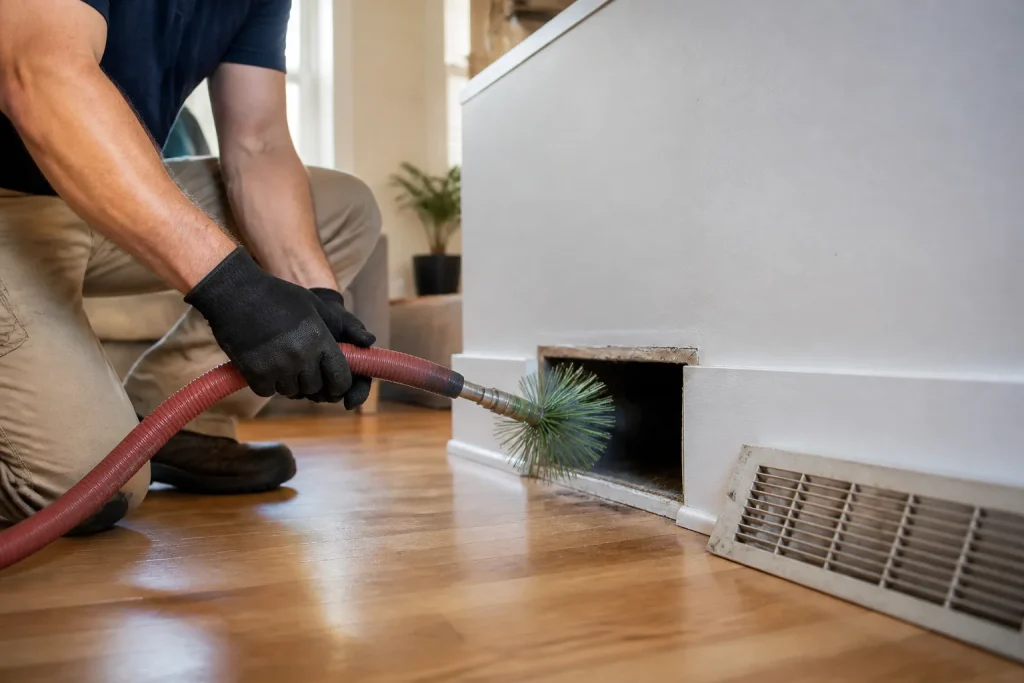
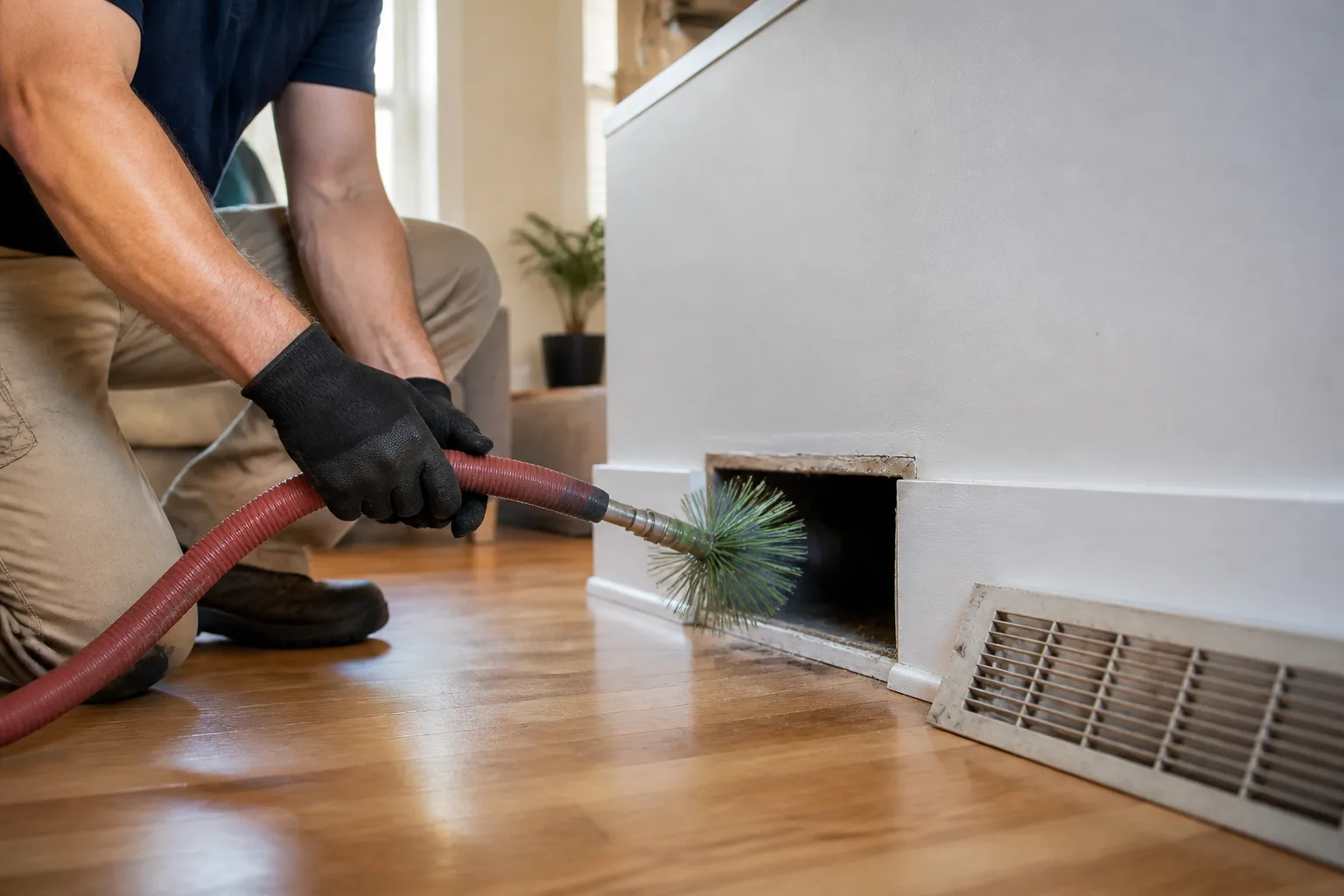
Rotobrush works by combining a rotating brush head with suction that runs at the same point of contact. The brush loosens debris from the duct wall; the vacuum captures it right there, in real time, before it has a chance to drift. That co-located design is the whole point. Older cleaning approaches blew air through the system and hoped to catch the debris downstream. Rotobrush dislodges and catches in the same pass.
There are two parts worth understanding:
- The rotating brush assembly: a flexible shaft drives a brush head that maintains continuous contact with the duct interior as the technician feeds it forward.
- The co-located vacuum: the suction nozzle sits with the brush, so dislodged material is pulled away at the source rather than settling later.
That combination is why the method outperforms straight air-blow cleaning for many homes in Sheepshead Bay. Mechanical contact removes what’s stuck to the duct wall. Suction at the same point stops it from migrating. In our experience, a technician running Rotobrush should be able to show you before-and-after imagery at multiple points in your system, not just the main trunk. If they can’t, ask why. Rotobrush is a method, not a marketing badge, and the results should be visible.
Which ducts Rotobrush suits in Sheepshead Bay
Rotobrush is well suited to rigid sheet metal ducting, which is common in older Sheepshead Bay homes. The metal walls hold up to continuous brushing, and the surface gives the brush head something firm to work against, so debris breaks loose cleanly. The same setup can be handled with Nikro equipment where the job calls for it, and both are purpose-built rigs, not consumer tools.
Flex duct is a different story. The inner liner is thin and corrugated. Excessive brush pressure can abrade it, so the technician should adjust speed, brush size, and feed rate, or choose different tooling altogether. A technician who defaults to Rotobrush on flex duct without checking the liner first is either inexperienced or not paying attention to your home. Either way, that’s information you want before the job starts, not after.
Duct material compatibility at a glance:
- Rigid sheet metal: well suited to Rotobrush; continuous contact brushing is safe and effective.
- Flex duct (corrugated inner liner): requires adjusted brush technique or alternative tooling; liner condition must be checked first.
- Ductboard: delicate surface; the technician should assess before brushing and may prefer a gentler method overall.
If the technician hasn’t looked at your duct material before recommending a method, that’s your cue to ask questions. Method selection should follow assessment, not the other way around.
What a technician should check before choosing the method
Before any brush or air-whip touches your system, the technician should inspect the ducts. That means visual inspection at accessible points and, where it’s warranted, a camera scope to see inside the trunk line and branches. The purpose is to answer three questions: what material is the duct, what kind of debris is present, and what condition is the interior in.
Debris type matters more than most homeowners realize. Drywall dust from a recent renovation behaves differently from accumulated household dust, and both differ from the musty build-up that points to moisture. In Sheepshead Bay homes, post-renovation debris is one of the common reasons people call. In that case the technician should plan the cleaning around the material actually present.
Condition matters too. If a camera scope shows loose joints, torn flex liner, or separated sections, cleaning first and sealing later is usually the wrong order. The system needs to hold together before it can be cleaned effectively. That’s why we handle air duct cleaning and duct repair and sealing as connected work rather than two separate appointments. A technician who cleans a compromised system and walks away has only done half the job.
How Rotobrush compares to air-whip and skipper-ball methods
Rotobrush, air-whip, and skipper-ball methods each clean ducts; they just go about it differently. Air-whip uses compressed air to blast debris loose and relies on a downstream vacuum to catch it. Skipper-ball sends a whipping, spinning ball through the duct on air pressure. Rotobrush brushes mechanically with suction at the point of contact. None of these wins outright. The right one depends on the duct and the debris.
Where a system has heavy, adhered build-up on rigid metal, the mechanical contact of Rotobrush tends to break it loose more thoroughly than air alone. Where ducting has tight turns or fragile sections, an air-based method may be the safer option. On multi-branch systems, a technician may use one method for the trunk and another for the branches. That’s normal, and it’s the sign of someone making decisions on your behalf rather than following a script.
Here’s what we’d suggest asking any company before they start:
- What method will you use, and why did you choose it for my ducts?
- Did you inspect or scope the ducts first?
- What documentation will I receive when the job is done?
Compare Rotobrush to air-whip by asking those three questions of every company you contact. The answers will tell you something the brochure won’t.
What you should see after a Rotobrush job
After a Rotobrush cleaning, you should receive before-and-after imagery from more than one point in the system. Not just the main trunk where the result looks impressive. Photos or video from a supply register, a branch line, and inside the trunk tell you what actually happened throughout the air pathway, not just at the spot the technician chose to document.
Ask for those records in writing. Any company with nothing to hide should provide them. If the company used Abatement Technologies air scrubbers during the work, that limits cross-contamination by capturing dislodged particles in the room while cleaning is underway. If a sanitizing treatment was applied with Guardsman-grade products, the paperwork should say so.
Safe handling matters here, too. High-tension springs and wiring are not duct-cleaning territory, but some Sheepshead Bay homes have HVAC components or mechanical systems in the same path as the ductwork. Trained technicians know where their job ends. When a duct job runs into electrical or mechanical work, that should be flagged, not improvised.
When to call a pro instead of thinking about it
Musty odors that keep coming back, visible dust blowing from registers, allergy symptoms that get worse when the heating or cooling runs, or a recent renovation that left debris in the system are all reasons to call. If you have children, elderly residents, or allergy sufferers in the house, having the system professionally cleaned before or after major work is a reasonable step. Call (866) 937-8180. We answer 24/7. Fast dispatch from 7am to 7pm, Sunday through Friday.
When to call a pro
The decision to bring in a technician usually comes down to whether the ductwork needs mechanical cleaning or a repair your vacuum and a brush can’t manage. Signs it’s time:
- Persistent musty or stale smell when the system runs, and it comes back after cleaning vents yourself
- Visible dust collecting on surfaces near supply registers shortly after you’ve wiped them down
- Recent renovation and drywall work and you’re unsure the system was protected
- Cold or hot spots in the house that suggest restricted airflow
- An allergy sufferer in the home whose symptoms flare during heating and cooling season
One light note: if your ductwork is making noises you can’t identify and your first instinct is to hit it, the way some of us hit a misbehaving printer, it’s probably time to call. Ducts are rarely fixed by percussion.
Related services in Sheepshead Bay
Duct cleaning is one part of the air pathway. If your home needs more, we cover HVAC cleaning, dryer vent cleaning, and air-quality work with Honeywell and Aprilaire filtration products. For the full picture of what we handle in Sheepshead Bay, visit our main page at Air Duct Cleaning Sheepshead Bay.
What happens when you call
- 1
A real person answersNo phone trees – you reach a local pro.
- 2
You get an upfront price rangeHonest numbers before anyone is dispatched.
- 3
A background-checked tech heads outLicensed & insured, dispatched right away.
- 4
You approve before work beginsNothing starts until you say go.
The Bottom Line
Rotobrush is a mechanical cleaning method, not a promise, and it earns its place when the duct material and debris call for it. Rigid sheet metal in older Sheepshead Bay homes is a good match. Flex duct needs a technician who knows how to adjust the approach. And no matter the method, you should see documentation of the work at multiple points in your system. If a company can’t or won’t show you that, it’s telling you something.
If you’re in Sheepshead Bay and need help, Air Duct Cleaning Sheepshead Bay offers free estimates. Call (866) 937-8180. We answer 24/7. Fast dispatch from 7am to 7pm, Sunday through Friday.
Frequently Asked Questions
Rotobrush is a mechanical duct-cleaning method that uses a rotating brush head with suction at the same point of contact, so debris is loosened and captured in one pass. It’s most effective on rigid ductwork that can withstand continuous brushing.
It can be, but only with adjusted technique or different tooling. Flex duct has a thin corrugated liner that can be damaged by excessive brush pressure. The technician should inspect the duct condition before deciding on a method. Call (866) 937-8180 for a free estimate.
Ask for before-and-after imagery at multiple points in the system. A professional Rotobrush or Nikro job will leave documentation; a shop-vac pass won’t produce the same results or the same records. Any company confident in its work should be happy to show you.
Most homes don’t need it on a fixed schedule. Clean when you have a real reason: visible debris, musty odors, a recent renovation, or symptoms tied to indoor air quality. A technician can assess the system and tell you honestly whether it’s due. Call (866) 937-8180 to schedule an inspection.
Written by the team at Air Duct Cleaning Sheepshead Bay.
Need Air Duct Cleaning Help?
Call Air Duct Cleaning Sheepshead Bay - the local pro we connect you with is licensed and insured, with free written estimates in Sheepshead Bay.
(866) 937-8180