
Last updated November 22, 2026
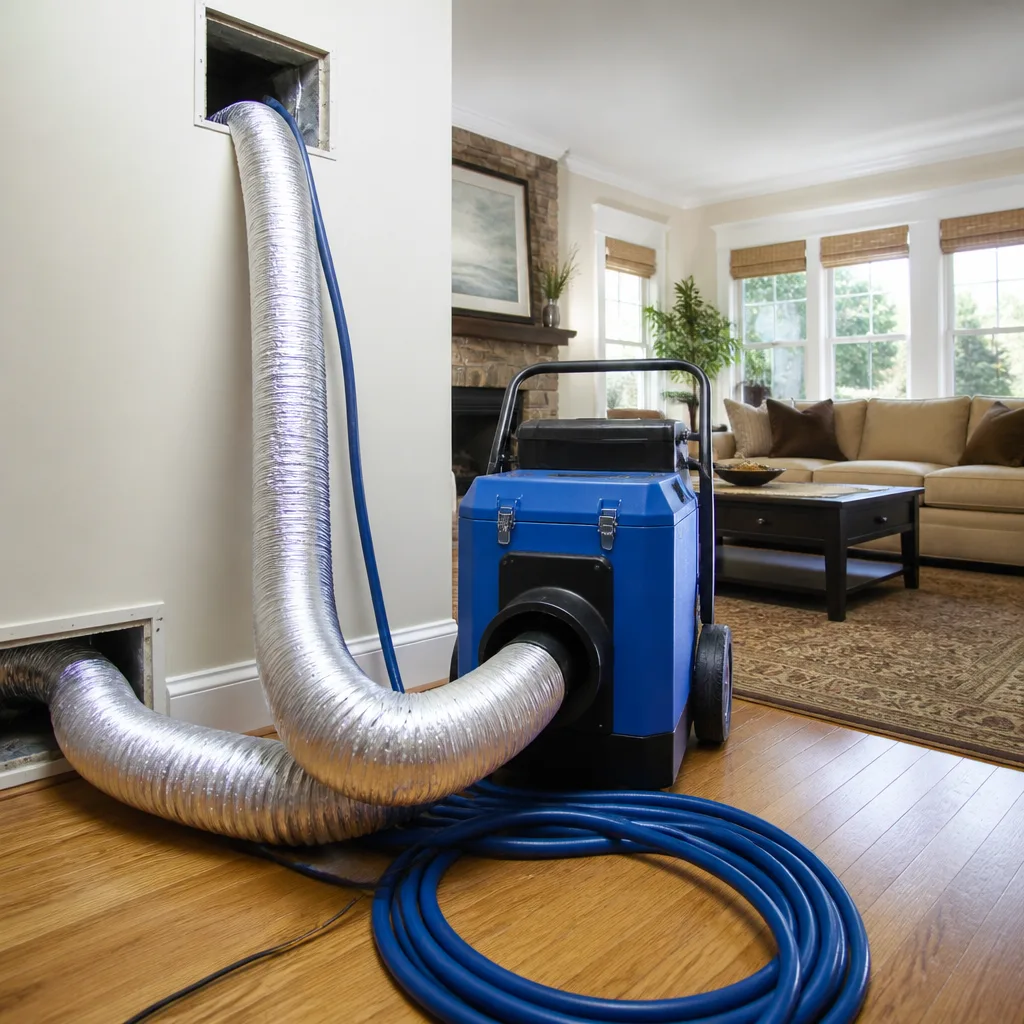 Whole-home duct cleaning
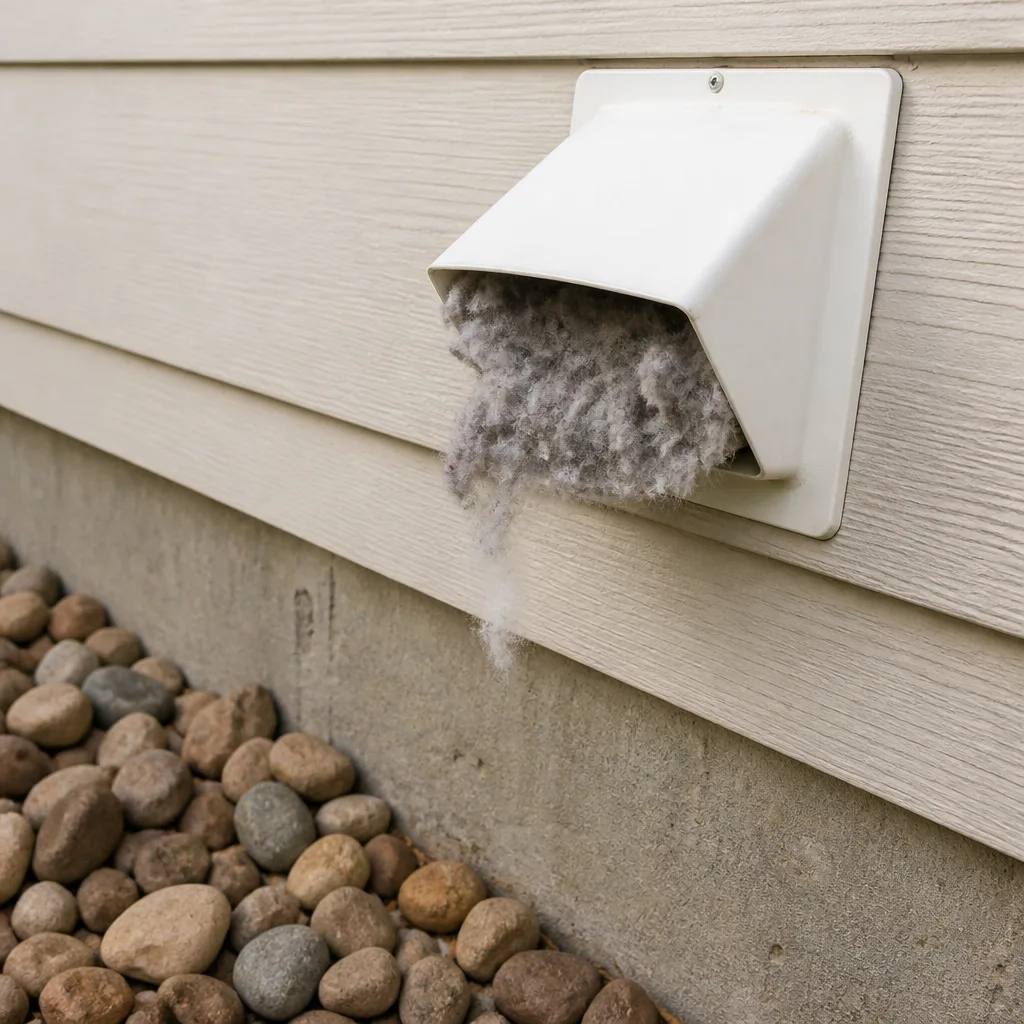 Dryer vent cleaning
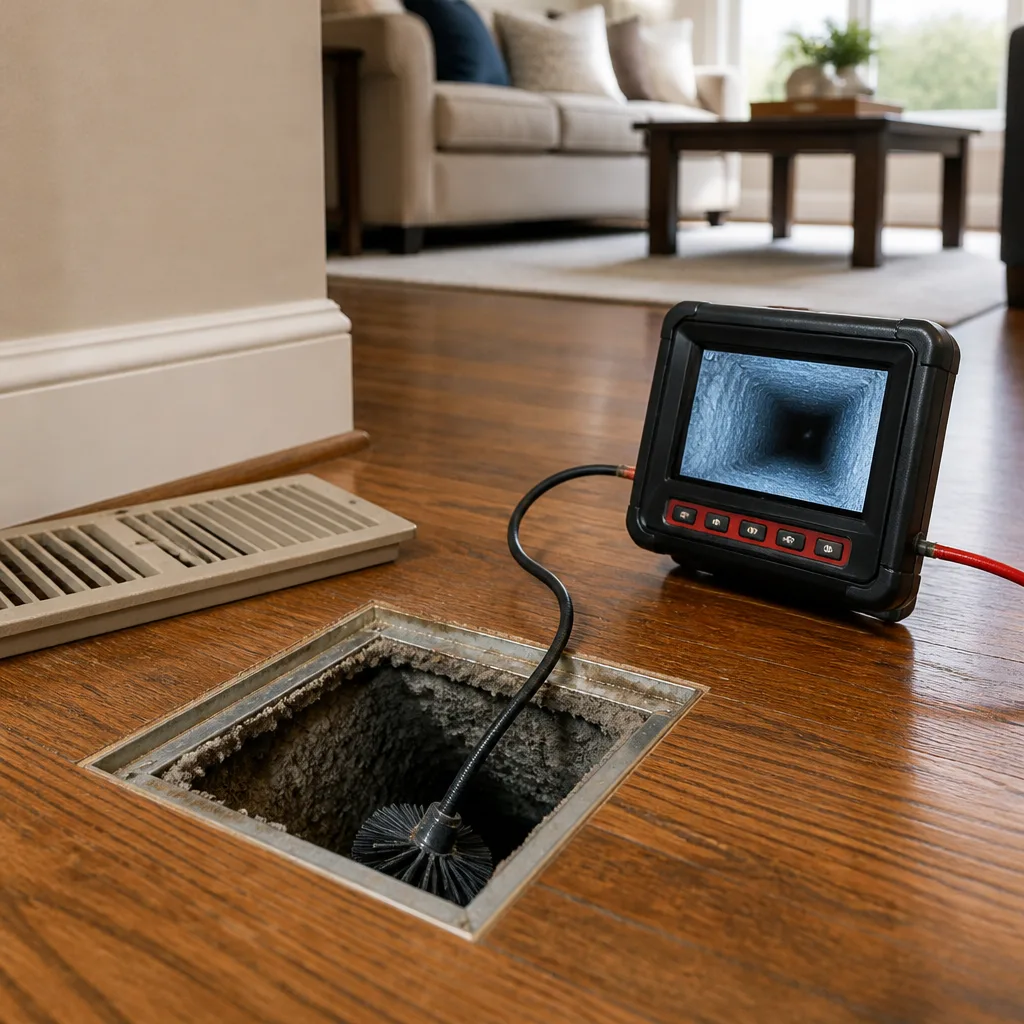 Camera inspection
 Sanitizing & deodorizing
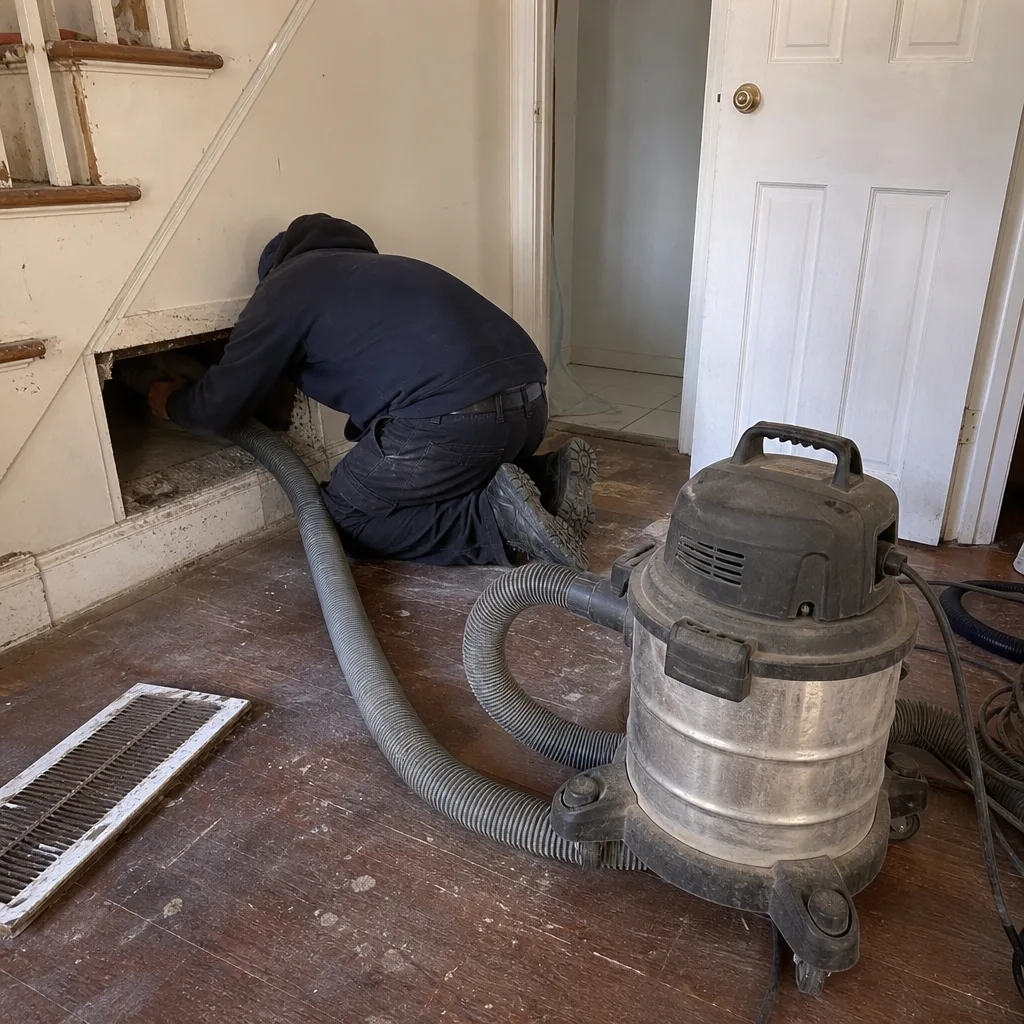
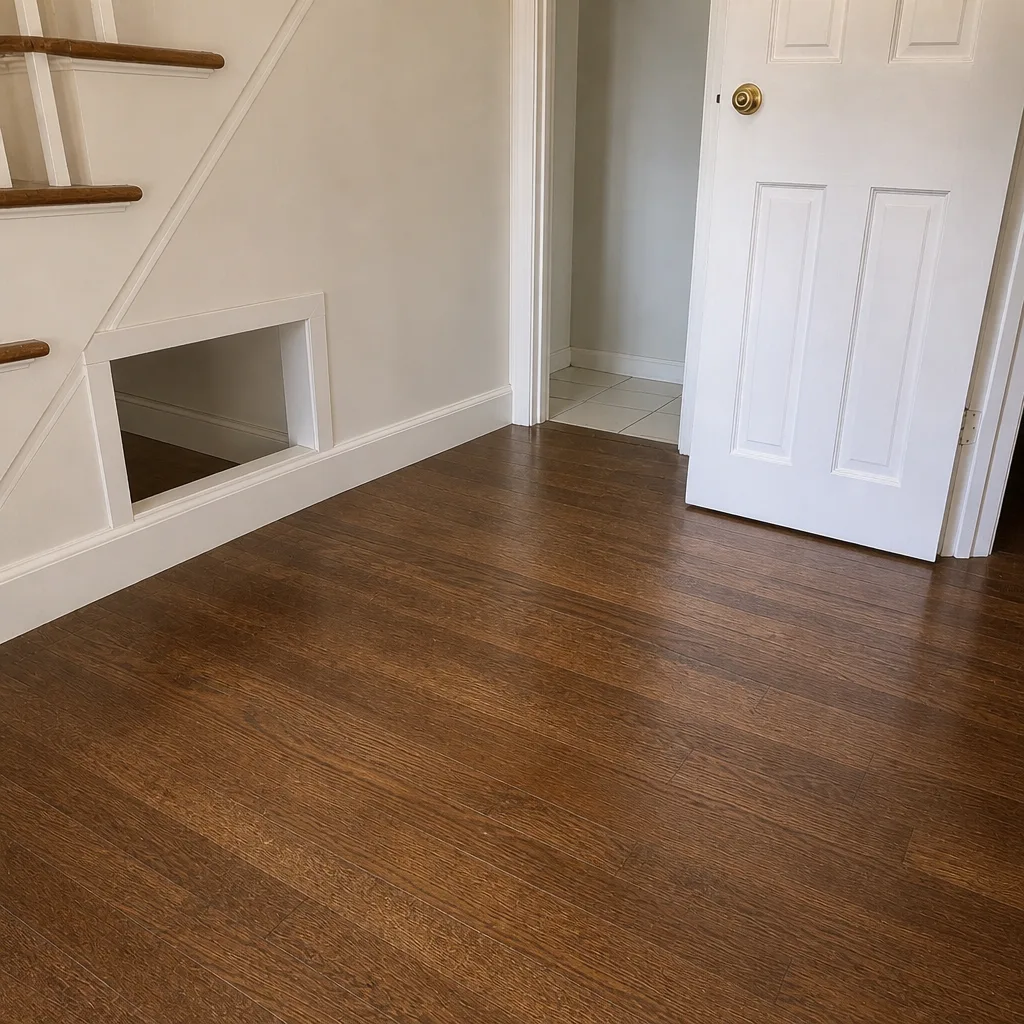
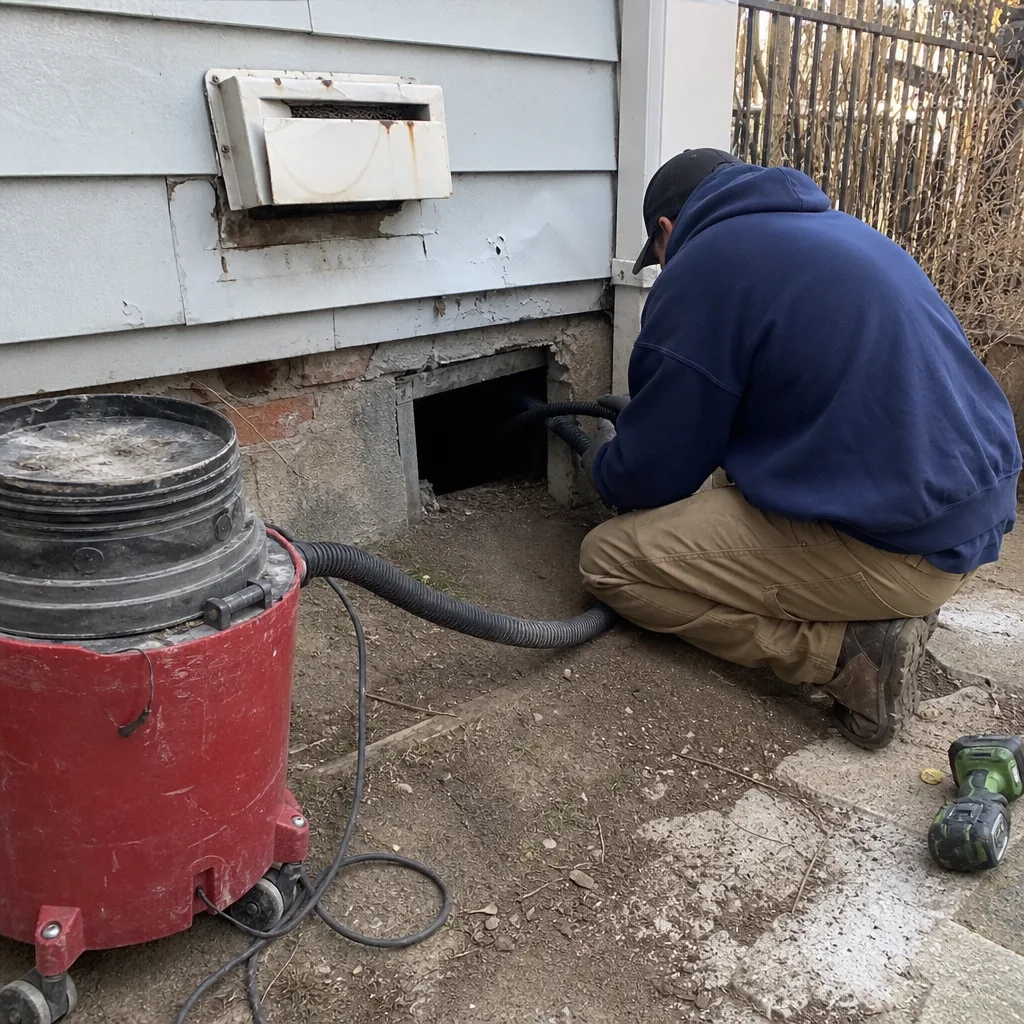
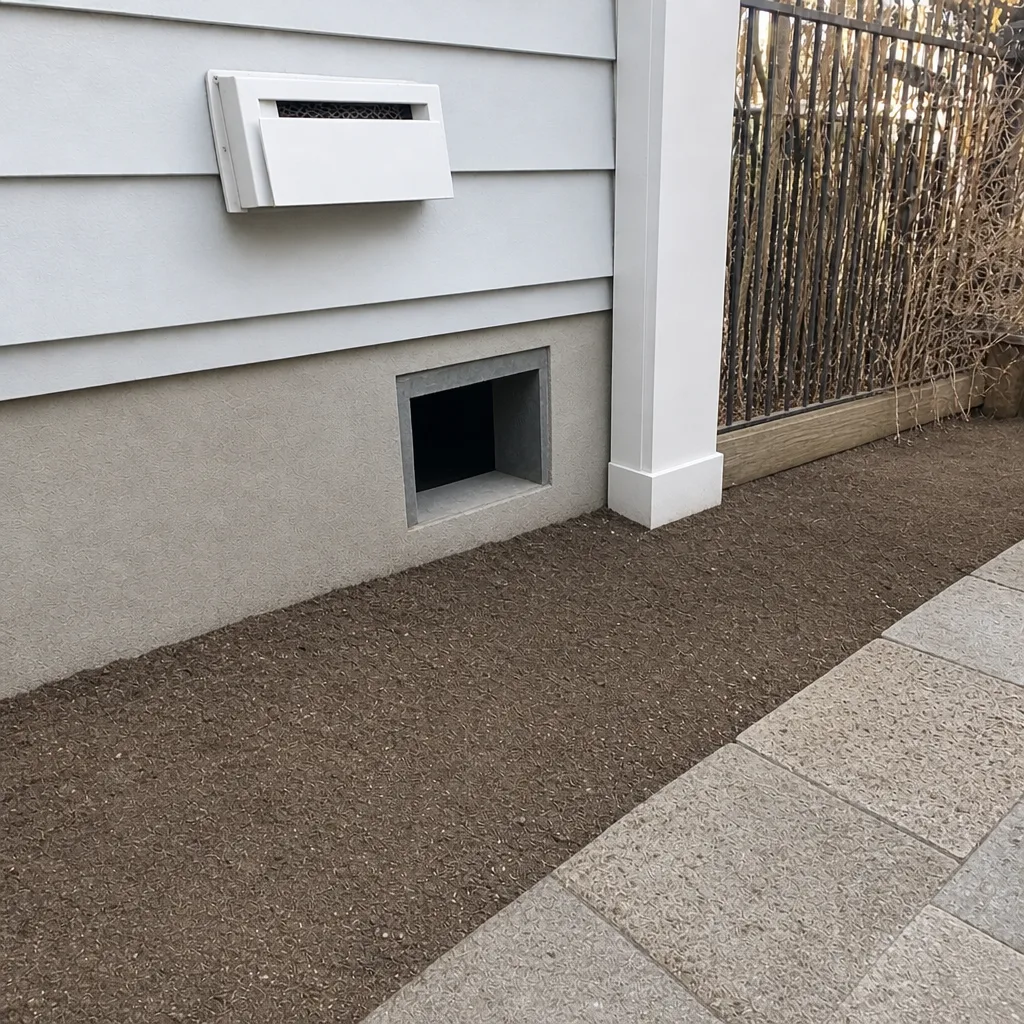
Whole-system duct and dryer vent check with before-and-after photos - you see exactly what came out of your vents
That "$99 whole-house special" is a bait ad - the real number appears once they are in your hallway, or the "clean" is a shop-vac at the register. We photograph the inside of your ducts before and after instead.
DIY vs Professional Air Duct Cleaning: The Sheepshead Bay Homeowner’s Decision Guide
Most DIY duct cleaning advice starts with cost. That’s the wrong starting point. A homeowner with a shop vac and a brush kit can reach the first foot or so inside a supply register. The rest of the ductwork in a typical Sheepshead Bay house or apartment building – the trunk lines, the branch runs, the plenum where contamination actually accumulates – sits behind a physical barrier that consumer equipment cannot cross. It isn’t a question of effort or willingness. It’s a question of whether the tools exist. This guide walks through the physics, the realistic DIY scope, the specific risks in older Sheepshead Bay housing, and how to tell a real professional job from one that just looks like it.
Quick Answer
Professional air duct cleaning is worth it when contamination has moved past the registers into the trunk lines and branch runs, because consumer vacuums and brush kits can’t generate the negative pressure required to dislodge and capture debris in those sections. DIY work is genuinely useful for register face cleaning, filter changes, and visual dryer vent checks. The dividing line is simple: if you can’t see and reach the surface, consumer tools can’t clean it.
Styles & brands we work with
- Whole-home duct cleaning
- Dryer vent cleaning
- Camera inspection
- Sanitizing & deodorizing
Table of Contents
- The Physics of Duct Cleaning: Why Negative Pressure Matters
- What You Can Realistically Do Yourself
- What Actually Requires Professional Access and Equipment
- The Partial-Cleaning Risk in Older Sheepshead Bay Housing
- Cost-Benefit: Outcomes, Not Just Price
- How to Spot a “Professional” Job That’s Really a Shop Vac
- What Sheepshead Bay Homes Actually Face
- A Decision Framework for Your Household
The Physics of Duct Cleaning: Why Negative Pressure Matters
Air duct cleaning isn’t scrubbing. It’s controlled removal. The entire process depends on one thing: creating enough negative pressure inside the duct system – and keeping it isolated – so that the moment contamination is dislodged from a surface, it gets captured rather than blown into the living space. A shop vac pulls air. A professional duct cleaning system pulls air at a volume and pressure that a consumer-grade motor physically cannot reach, and it does so through a sealed connection at the main trunk, with the rest of the system either isolated or under controlled vacuum the whole time.
Here’s the practical difference:
- Airflow volume (CFM). Consumer vacuums move a small volume of air through a narrow hose and a small filter. Professional systems are built to move a volume of air through a much larger hose and a multi-stage filtration stack, so dislodged debris has somewhere to go and stays there.
- Static pressure and reach. Once a hose leaves the register, the suction drops sharply in consumer equipment. Inside a long trunk line 20 or 30 feet from the register, there’s essentially none.
- Mechanical agitation. Dislodged debris won’t move unless something breaks its grip on the duct wall. Professional systems use rotary brush heads and high-pressure air whips on motorized reels, sized to the duct interior, driven from outside the duct.
- Filtration during service. Whatever gets airborne has to be trapped. Professional setups use HEPA-grade filtration and negative-air machines on-site so the workspace and the home’s air stay separate from the duct interior being cleaned.
Consumer tools fail on every one of those four points. A brush kit on a flexible rod can loosen dust from a duct wall – that part works, sort of – but without the negative pressure to capture what’s loosened, the debris simply redistributes. Inside the system, it drops back down. Or into the room. That’s why DIY cleaning often leaves the house dustier than before, not cleaner.
What You Can Realistically Do Yourself
There’s a legitimate DIY list, and it’s useful. It just isn’t duct cleaning in the professional sense. Here’s the honest split between what makes a real difference and what doesn’t.
- Wipe the register faces and grilles. Dust on the visible face of a supply or return register is sitting on the outside of the system. Cleaning it removes it. A damp cloth, a mild cleaner, done.
- Remove and wash return grilles. Most return-air grilles lift off with two tabs or a screwdriver. Washing them and reinstalling is straightforward and worth doing before a professional cleaning, because the technician can then clean the interior behind them without working around loose surface dust.
- Replace filters on schedule. This is the highest-value maintenance item a homeowner controls. A clogged filter strains the blower, reduces airflow, and lets more dust travel past. Replace according to the filter rating and household conditions – homes with pets or heavy street dust tend to need more frequent changes.
- Vacuum register-adjacent dust with a HEPA household vacuum. Where the register meets the wall or ceiling, dust accumulates on the trim. A HEPA vacuum handles that without re-suspending it.
- Visually inspect the dryer vent. With the dryer off, check that the exterior flap opens freely and the interior connection is tight. Cleaning the lint trap is basic. If you can’t reach the full vent run or the flap doesn’t open, that’s professional territory – dryer vents are a fire risk when lint builds up inside the run.
- Keep the return side clear. Don’t block returns with furniture. Airflow restriction on returns increases dust load on the system and forces the blower to work harder.
Nothing in that list touches the interior of the ductwork or the HVAC unit itself. Those are the areas that need professional equipment and access. For the register-level maintenance you can do yourself, our guide to air duct cleaning covers the intervals that make sense for a typical household.
What Actually Requires Professional Access and Equipment
The interior of the duct system is where contamination lives – not because ducts are somehow worse than any other part of a house, but because they’re a closed pathway with limited airflow and constant dust entering. A professional job that’s done properly touches every part of the air pathway, from the air handler to the registers, and it does it with tools specific to each section.
What a full professional service includes:
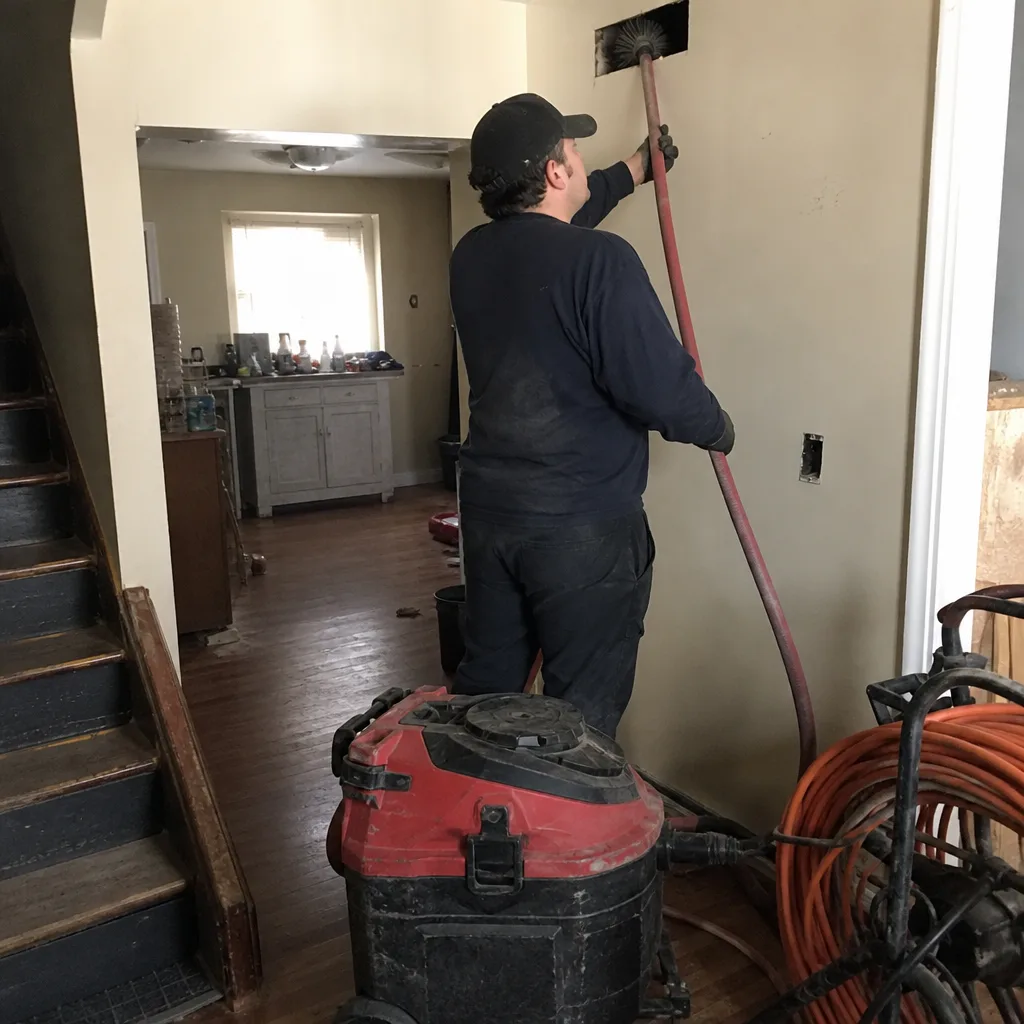
- The main trunk lines and branch runs. The highest-volume sections of duct, and the ones that hold the most contamination. Reached through access ports cut into the duct, cleaned from inside with rotary and air-driven tools, and kept under negative pressure during the work.
- The HVAC air handler and blower compartment. The blower wheel, evaporator coil face, drain pan, and cabinet interior. A clean duct system feeding into a dirty air handler can’t deliver clean air. Our HVAC cleaning service handles that side of the pathway.
- Return-air ducts and plenum. Return sections carry air back to the unit. They get dirty faster than supply lines because they’re not filtered at the source.
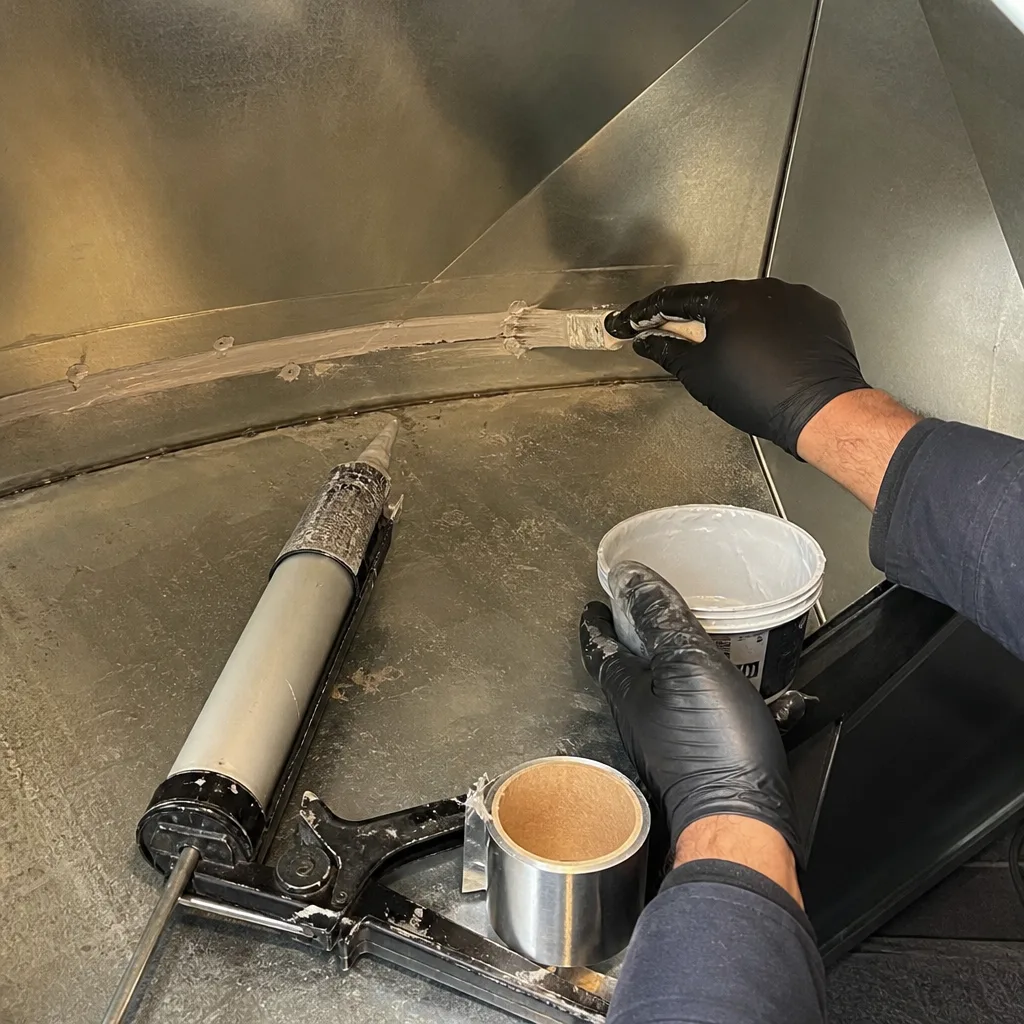
- Duct repair and sealing. Leaky joints and disconnected sections are common in older systems. Cleaning without addressing leakage means cleaned air escaping into wall cavities or attic space. Sealing is part of the same job when it’s needed.
- Sanitizing treatment. Where microbial growth or persistent odor is present, a Guardsman-grade sanitizing treatment is applied as a final step after cleaning and drying. It addresses what vacuuming alone can’t.
- On-site filtration. Abatement Technologies air scrubbing equipment runs throughout the service, capturing dislodged particulates so they don’t end up in the room.
Each of those steps needs a specific tool. The rotary brush system, the air whip, the negative-air machine, the HEPA scrubber – none of those exist as consumer products. That’s the whole point. Our technicians use Rotobrush and Nikro systems because those rigs are what commercial contractors use, and there’s no honest consumer equivalent.
The Partial-Cleaning Risk in Older Sheepshead Bay Housing
Partial cleaning is worse than no cleaning when it comes to short-term air quality. That’s the counterintuitive part of the DIY conversation, and it matters especially in Sheepshead Bay, where a large share of the housing stock predates modern HVAC design and has ductwork that has been quietly accumulating dust for decades.
Here’s what happens when you disturb settled contamination without capturing it:
- The brush or vacuum tip breaks the bond between settled material and the duct wall.
- Fine particulate – the fraction that matters most for respiratory irritation – becomes airborne inside the duct.
- There’s no negative-pressure capture pulling it out, so it travels with the next blower cycle.
- It exits through the supply registers into the rooms where people are breathing.
For a few hours to a few days afterward, the household is likely to experience more dust, not less. Sensitive occupants – children, older residents, anyone with asthma or allergies – are the most affected. In a Sheepshead Bay apartment or a semi-detached house built decades ago, the duct runs are often longer and less accessible than a newer build, which makes the partial-cleaning problem worse: the trunk lines are exactly the part you can’t reach, and they’re exactly where contamination concentrates.
This is also why professional cleaning in older Sheepshead Bay homes should include a proper visual assessment before any work starts, and why duct repair and sealing get folded into the same job when the technician finds disconnected or leaking sections. Cleaning a leaking system and leaving it leaking is a ceiling on what the job can achieve.
Cost-Benefit: Outcomes, Not Just Price
The DIY-versus-professional decision usually gets framed as a dollar comparison. That’s not the right comparison. The right question is: what did the work actually change inside the system? A DIY attempt that doesn’t reach the trunk lines costs less and delivers no measurable indoor-air improvement. That’s not a saving. It’s money spent on a job that didn’t happen.
A useful cost-benefit framework has three parts:
- Scope. Does the process actually clean the surfaces that hold contamination? Consumer tools reach the first foot of a register and nothing beyond. A professional job cleans the full pathway from the unit to the registers. If your goal is measurably cleaner air, only one of those scopes delivers it.
- Capture. Does the process trap the dislodged material, or redistribute it? This is the difference between an A/V setup running Abatement Technologies air scrubbing on-site and a shop vac blowing dust back through the supply registers.
- Full-system accountability. Is the company responsible for the entire air pathway – cleaning, repair, sanitizing, filtration and humidity advice – or just one piece? Splitting the job across multiple contractors means nobody owns the outcome. We keep it under one appointment because IAQ problems rarely live in one component.
The pricing is per job by written estimate, agreed before work starts. That means you know the number before anyone touches the system, and there’s no per-vent pricing structure – which is where bait-and-switch pricing tends to hide in this industry. A quoted per-vent rate looks attractive until the technician counts vents and the “final” number is several multiples of what was quoted. We don’t quote that way.
Filter and humidity-control work – the filtration and humidity products we service through Honeywell and Aprilaire – sometimes make more sense as a first move than a full cleaning, especially in homes where the immediate problem is airborne dust rather than contamination inside the ducts. That’s a conversation worth having before any work is scheduled.
How to Spot a “Professional” Job That’s Really a Shop Vac
Some companies offer air duct cleaning that uses exactly the equipment a homeowner could buy at a hardware store. The work looks like cleaning, bills like professional service, and adds nothing beyond what a determined DIYer could accomplish. The equipment question is the single most useful filter for spotting that.
Ask these questions before scheduling:
- “What negative-pressure equipment will you use?” A real answer names a specific system: a truck-mounted or portable negative-air machine connected at the main trunk, not “our powerful vacuum”.
- “Do you use rotary brush or air-whip tools on a motorized reel?” If the answer is a hand-held brush kit on a rod, that’s consumer-grade agitation.
- “What filtration runs on-site during the work?” Look for named HEPA-grade or negative-air equipment. Abatement Technologies is one brand that shows up on real jobs.
- “Do you cut access ports to reach the trunk line?” A job that only works through the registers never touches the trunk line. Proper access means ports cut, used, and sealed afterward.
- “Will you show before-and-after photos of my own system?” Photos of your own ducts are the honest record. Stock photos are not.
- “Do you clean the HVAC unit too, or just the ducts?” A duct-only job leaves the biggest dirt source (the blower and coil) untouched.
One flat price per system, agreed before work starts, with before-and-after photos of your own ducts – that combination is what a legitimate operation looks like. If those two things aren’t offered up front, the rest of the pitch doesn’t matter.
What Sheepshead Bay Homes Actually Face
Sheepshead Bay’s housing mix shapes what duct systems here actually deal with. Much of the neighborhood runs on older residential construction – brick and masonry, mixed semi-detached and attached homes, plenty of walk-up apartment buildings off the main avenues, and condos where the duct system is shared between units in one way or another. The relevant factors aren’t weather stories. They’re the practical conditions inside those buildings.
- Prolonged dust accumulation. Systems in older buildings have often been running for many years without a full cleaning, so the settled layer in trunk lines is deep and heavy. This is exactly the material DIY cleaning disturbs but can’t remove.
- Renovation dust. Sheepshead Bay has steady renovation activity – kitchens, bathrooms, floor replacements. Drywall dust, sawdust, and insulation fibers enter return-air intakes and settle throughout the duct system. Post-renovation cleaning is one of the clearest cases where professional service is worth it: no shop vac reaches the branch runs where that material ends up.
- Building-related shared systems. In apartment buildings where a duct serves multiple units, cleaning has to be coordinated carefully. On-site filtration and system isolation matter more, not less.
- Humidity swings. Indoor humidity in Sheepshead Bay homes shifts seasonally in a way that favors microbial growth in air handlers and drain pans. That’s the reason sanitizing and humidity control come up in the same conversation as cleaning.
- Dryer vent concerns in attached homes. Where a laundry room shares a wall with a neighbor, dryer vent runs are often long or poorly routed. That’s genuinely a case for professional dryer vent service rather than a DIY lint brush, because the run itself is the fire risk. Our dryer vent cleaning page explains the access and cleaning approach.
Nothing in that list is unique to Sheepshead Bay. It’s just what older housing stock looks like when duct cleaning has been neglected for long enough.
A Decision Framework for Your Household
Work through these in order. Each answer narrows the decision.
- Is there a visible or smellable problem? Musty odor from registers, visible dust discharge when the system turns on, allergy flare-ups that track with HVAC cycles, or recent renovation debris all point toward contamination beyond the registers. That’s professional territory.
- When was the last full cleaning? If the answer is unknown, or longer than several years, trunk-line contamination is likely. A proper professional assessment will tell you whether cleaning is needed now.
- Who lives in the home? Households with young children, older residents, or allergy and asthma sufferers get the most benefit from full-pathway cleaning – and the most risk from partial cleaning.
- Are you willing to handle register faces, filters, and dryer vent checks yourself? Do it. Those parts of airflow hygiene are worth doing regardless, and doing them first helps a professional cleaning go further.
- Is the intent to fix a specific problem or do routine maintenance? Specific problems (odor, discharge, post-renovation, visible growth in the air handler) need professional service. Routine filter and register maintenance is fine on your own.
If you end up at step one or two, get a proper estimate before deciding further. A good assessment is worth more than a guess.
Common Mistakes to Avoid
- Cleaning the register faces and calling it duct cleaning. A clean grille is nice. It does nothing to the trunk line two feet behind it, which is where the contamination lives.
- Running a shop vac through the first few feet of duct and stopping there. This is the partial-cleaning problem. You loosen settled dust without capturing it, and it exits the next supply register into the room.
- Assuming a cheap per-vent quote is a legitimate one. Per-vent pricing structures are the standard entry point for bait-and-switch math. Look for a flat price per system, in writing, before work starts.
- Cleaning the ducts but not the HVAC air handler. The blower wheel and coil are a source of contamination. A duct-only job leaves half the problem in place, and it’s the half that pushes dirt back into the ducts.
- Skipping duct repair and sealing when it’s needed. Leaking joints let cleaned air escape into wall cavities and pull unfiltered air from unconditioned spaces. Cleaning a leaky system is a temporary result at best.
- Hiring a company that can’t name its equipment. If the answer to “what negative-pressure equipment do you use” is vague, the equipment is probably consumer-grade.
- Assuming a dryer vent is fine because the flap opens. A flap that opens freely doesn’t prove the full run is clear. Long or poorly routed runs in Sheepshead Bay’s attached homes need proper cleaning, not a lint brush.
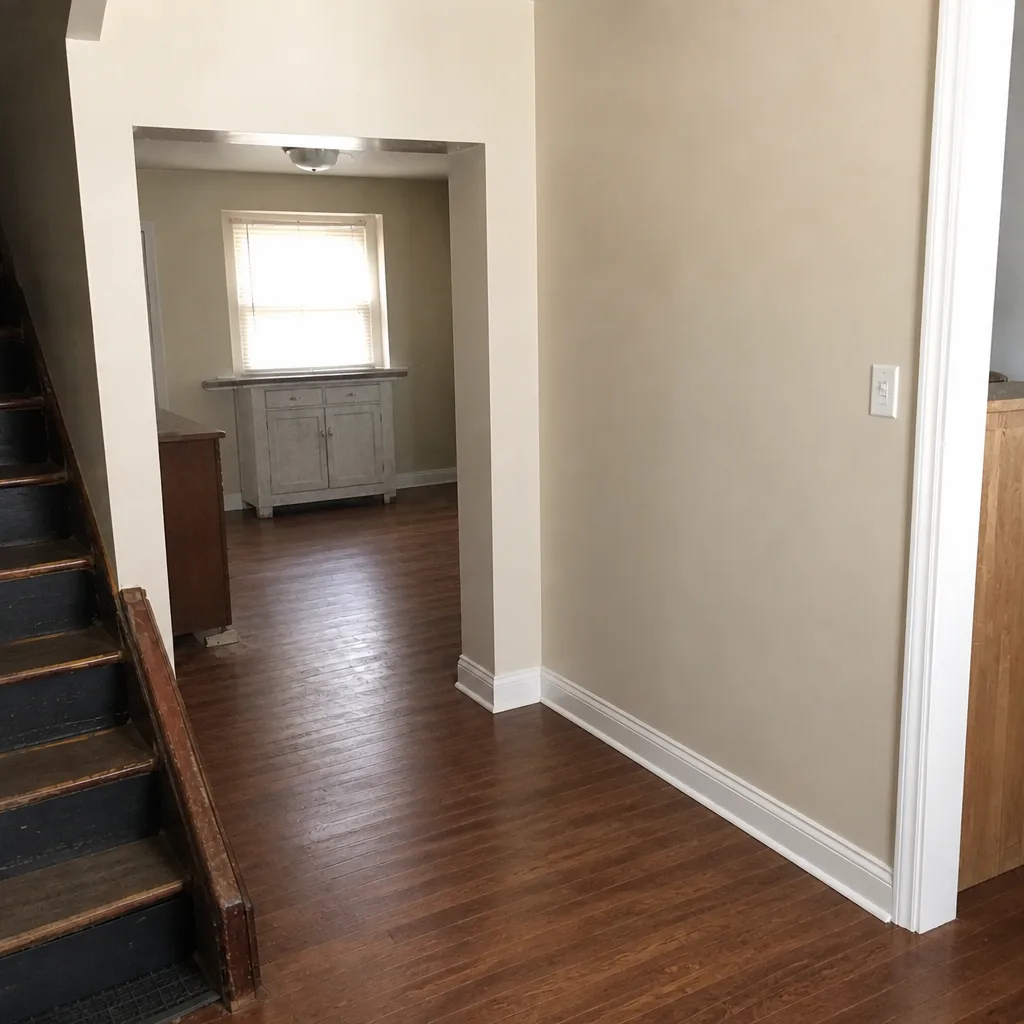
See the difference
 Before
 After
 Before
 After
 Before
 After
When to Call a Professional
Call a professional if any of these apply: persistent musty odor from the registers, visible dust discharge when the system runs, a recent renovation with drywall or insulation work, a known mold or microbial issue in the air handler, a duct system that hasn’t been fully cleaned in years, a dryer vent run you can’t fully reach, or a household where allergy and asthma symptoms track with HVAC cycles. Also call if the ducts show signs of disconnection, sagging, or visible leakage – cleaning and sealing in the same job makes more sense than doing them separately. Air Duct Cleaning Sheepshead Bay offers free estimates in Sheepshead Bay – call (866) 937-8180.
Frequently Asked Questions
No – a shop vac can’t clean duct interiors beyond the first foot or so past the register, because consumer vacuums can’t generate the negative pressure required to reach the trunk lines and branch runs, and they can’t capture the dislodged debris. A shop vac can help with register faces and filters. It can’t do duct cleaning in any meaningful sense.
DIY duct cleaning can increase short-term airborne particulate because consumer tools loosen settled contamination without capturing it, so the debris redistributes through the next blower cycle and exits into the living space. In older Sheepshead Bay homes with decades of settled dust, that effect is more noticeable and affects sensitive occupants most.
Professional duct cleaning requires commercial-grade equipment: negative-air machines connected at the trunk, rotary brush and air-whip systems driven on motorized reels, and on-site HEPA filtration. We use Rotobrush and Nikro systems and run Abatement Technologies air scrubbing on-site during every cleaning, because those tools capture what gets dislodged rather than leaving it in the air.
Most households need full duct cleaning every few years, sooner if there’s a recent renovation, a visible contamination or odor issue, or a household member with allergies or asthma. A lot depends on the home’s condition and how long the system has run without attention. An assessment is the right first step if you’re unsure – call (866) 937-8180 for a free estimate.
Pricing depends on the size of the system, the number of ducts, and whether repair, sealing, sanitizing, or HVAC cleaning is included – which is why we quote a flat price per system by written estimate rather than a per-vent rate. Estimates are free and the price is agreed before work starts.
The honest indicator is before-and-after photos of your own system, plus a clear description of what was cleaned and with what equipment. Any professional job should be happy to provide those – ask before you schedule. Also ask whether the HVAC unit is included, because duct cleaning alone leaves a major contamination source untouched.
The Bottom Line
The DIY-versus-professional question comes down to capability, not cost. Consumer tools handle register faces, filter changes, and visual dryer vent checks. They cannot reach the trunk lines and branch runs where contamination concentrates – and a partial cleaning can leave the home dustier than before, especially in older housing stock. The three questions that decide the matter: how long the system has run without a full cleaning, whether anyone in the household is sensitive to dust, and whether a specific problem (odor, discharge, post-renovation debris, microbial growth) is present. If any of those point to contamination beyond the register, get a proper assessment. A flat price per system, agreed before work starts, with photos of your own ducts, is the standard to hold every company to.
For a free estimate on full-pathway air duct cleaning, HVAC unit cleaning, duct repair and sealing, dryer vent cleaning, or air quality sanitizing, call Air Duct Cleaning Sheepshead Bay at (866) 937-8180. We answer 24/7. Fast dispatch from 7am to 7pm, Sunday through Friday. The local pro performing the work is licensed and insured as required, and the written estimate sets the final price before any work begins.
For an overview of everything we do across the neighborhood, start with air duct cleaning in Sheepshead Bay.
Written by the team at Air Duct Cleaning Sheepshead Bay.